

At 9:07 on a Monday morning, an underwriter opens two ecommerce applications. Both businesses sell legitimate products. Both expect similar monthly sales. Yet one file moves forward while the other lands in a follow-up queue.
The difference is rarely a clever pitch. It is clarity. One application lets the reviewer quickly understand the business, the customer journey, and the financial risk. The other makes the reviewer search for answers.
A strong merchant account application does not hide complexity. It explains it. Here is how to prepare a file that tells one consistent, credible story from the first page to the final supporting document.
If you want hands-on help evaluating requirements and preparing your submission, review Hopar’s merchant account application guidance.
What lands in an underwriter’s inbox?
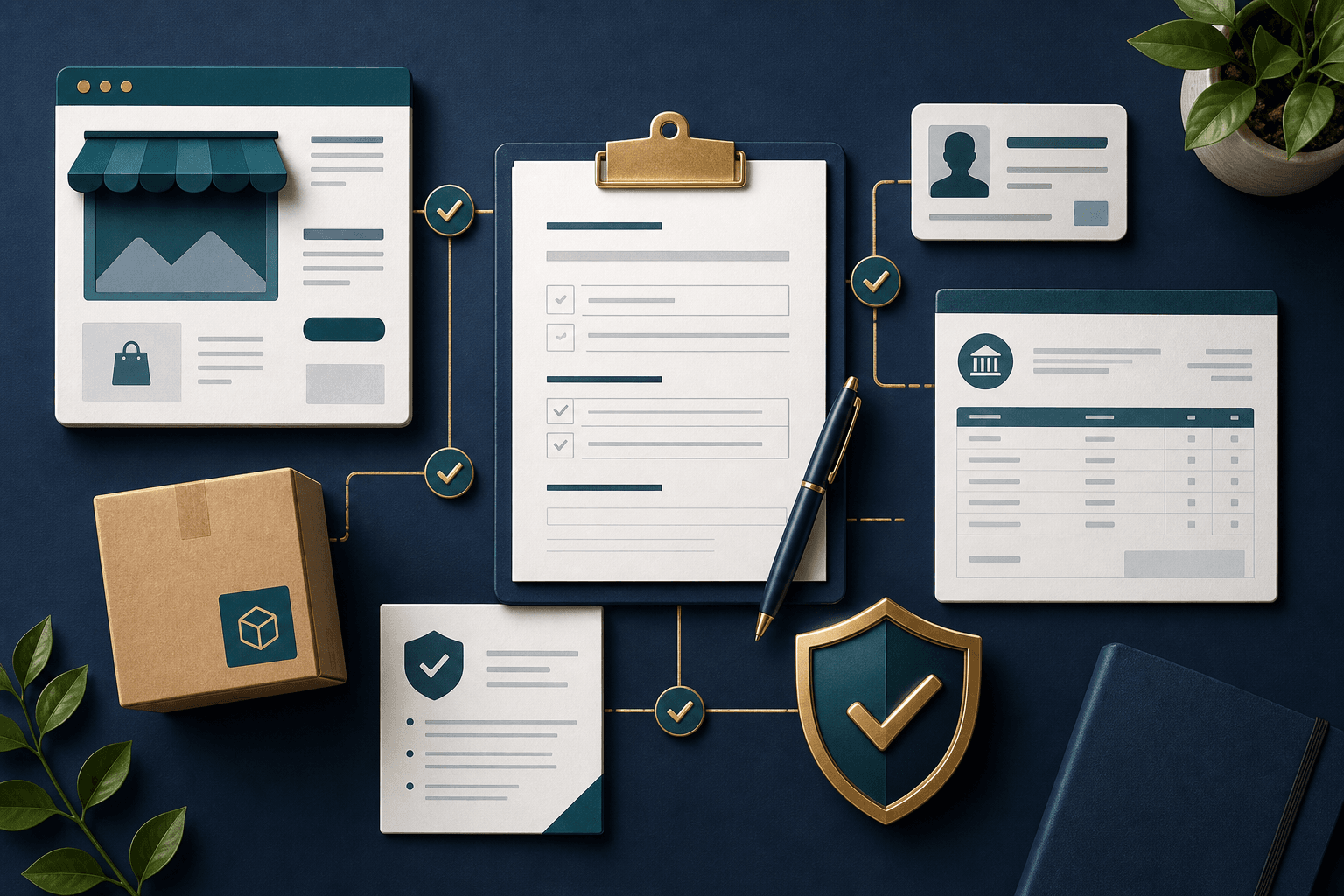
A payment provider is not reviewing only a form. It is comparing several versions of your business at once: your application, website, bank activity, processing history, policies, products, fulfilment model, and public footprint.
The reviewer’s job is to decide whether those pieces fit together. A beautiful website cannot compensate for conflicting ownership details. Strong revenue does not erase an unclear refund policy. Even a healthy business can trigger questions when its projected volume is far higher than its financial history suggests.
Think of your application as a map. The faster a reviewer can follow it, the fewer avoidable detours you are likely to encounter.
The six questions hiding behind every document request
1. What exactly is being sold?
Use plain language. “Consumer products” is vague; “reusable kitchen-storage products shipped from our Ontario warehouse” is useful. If you offer subscriptions, trials, digital access, pre-orders, or third-party fulfilment, state that clearly.
2. When does the customer receive it?
Delivery timing affects risk. Explain the time between payment and fulfilment, where inventory is held, which carriers you use, and how customers receive tracking or access.
3. What could cause a dispute?
Underwriters look for potential friction: recurring billing, long delivery windows, complicated cancellations, high ticket sizes, future delivery, aggressive claims, or products that require extra compliance review. Address these points directly.
4. Does the website tell the same story?
Your legal name, customer-facing name, products, prices, contact information, and policies should align with the application. A mismatch may be innocent, but it still creates another question.
5. Can the business absorb refunds and chargebacks?
Providers may review bank balances, refund patterns, processing statements, and financial history to understand whether the business can manage normal reversals without disrupting operations.
6. Are the projections believable?
Expected monthly volume and average ticket should connect to your marketing plan, sales history, inventory, and website pricing. Ambition is welcome; unexplained numbers are not.
Try the five-minute website test
Open your website as if you were a first-time customer. In five minutes, can you answer all of the following?
- What is the business selling?
- How much will the customer pay, including recurring charges?
- When and how will the order arrive?
- How can a customer cancel, return, or request a refund?
- How can a customer reach a real support channel?
- Which legal business is responsible for the transaction?
At minimum, make your shipping, refund, privacy, terms, and contact information easy to find. Test the checkout on mobile and desktop. Remove placeholder pages, broken links, conflicting prices, and unsupported claims.
If your checkout or platform setup needs a broader review, see Hopar’s guide to ecommerce payment processing.
Make the documentation easy to trust
The exact requirements vary by provider and business model, but an application may call for formation documents, government identification, bank statements, processing statements, supplier invoices, fulfilment evidence, financial records, licences, or marketing examples.
The important detail is consistency. Check that names, addresses, ownership percentages, bank information, and website disclosures match. If a document uses a former address or trade name, include a short explanation instead of hoping the difference goes unnoticed.
Name digital files clearly—such as April 2026 processing statement—and submit complete, readable pages. A neat package does not guarantee approval, but it lets the reviewer spend time assessing the business rather than deciphering the file.
An honest explanation beats a “perfect” application
Imagine a merchant whose standard delivery takes three weeks because products are made to order. Hiding that timeline would not make the risk disappear. A better submission explains the production schedule, shows how delivery expectations are disclosed before checkout, provides tracking evidence, and describes the refund process when an order is delayed.
The same principle applies to past chargebacks. State what happened, quantify the pattern, and document what changed—perhaps clearer billing descriptors, faster support, fraud screening, delivery confirmation, or revised cancellation flows. Hopar’s chargeback management guidance offers a practical starting point.
Underwriters do not expect every business to be effortless. They do expect the application to be accurate.
Let the numbers tell a coherent story
Suppose the website’s typical order is $80, but the application lists a $600 average ticket. Or a new business projects $500,000 in monthly volume without showing traffic, contracts, inventory, or relevant history. Those gaps invite follow-up.
Review monthly volume, average ticket, maximum ticket, refund rates, and chargeback rates before submitting. Use real history where it exists. When forecasts are necessary, explain the assumptions behind them and keep supporting evidence ready.
Also consider whether every payment needs to travel through a card checkout. For some business-to-business invoices or recurring bank payments, ACH processing may complement a card-processing strategy, subject to provider eligibility.
What not to do after a decline
- Do not submit a string of rushed applications. Repeated submissions with different answers can make the story harder to understand.
- Do not disguise the business model. Misclassification can create account problems even if an application initially passes.
- Do not treat a decline as a verdict on the business. It may reflect one provider’s policy, risk appetite, documentation threshold, or timing.
- Do not reapply without learning. Identify the likely concern and improve the evidence, website, or operating process first.
A pre-submission checklist for online businesses
- Describe the product, billing model, and fulfilment process in plain English.
- Confirm that legal, ownership, bank, and website details agree.
- Publish complete customer policies and visible support information.
- Test product pages, checkout, recurring-billing disclosures, and mobile usability.
- Calculate realistic volume and ticket-size figures.
- Organize readable supporting documents with clear file names.
- Explain unusual history, long delivery windows, or prior disputes directly.
- Keep a copy of everything submitted so future answers remain consistent.
Frequently asked questions
Does a complete merchant account application guarantee approval?
No. Each provider sets its own eligibility, underwriting, pricing, reserve, and funding decisions. Preparation reduces avoidable confusion; it cannot guarantee an outcome.
How long does underwriting take?
Timing varies with the provider, business model, completeness of the file, and whether follow-up review is required. Responding promptly with complete documents can help prevent unnecessary delays.
Can a new online business apply without processing history?
Often, yes, depending on the provider and business type. A new business may need to rely more heavily on its website, bank information, ownership background, fulfilment plan, supplier evidence, and realistic projections.
Can a business apply again after a decline?
Often it can, but the better first step is to understand what needs to change. The right next provider—and the right timing—depends on the underlying concern.
Prepare before the application becomes urgent
The best time to organize a merchant account application is before a launch date, seasonal rush, or processing interruption creates pressure. A calm review can uncover small inconsistencies while they are still easy to fix.
Want a second set of eyes on your application?
Hopar Payments helps online businesses review their payment needs, prepare application materials, and connect with potential providers. Request a consultation.
Hopar Payments is a consultancy, not a bank or payment processor. Providers make all approval, pricing, reserve, and funding decisions.
Sources and further reading
The following primary and provider documentation supports the factual context in this guide.
- Stripe business-information verification — Examples of business, website, identity, and document verification issues.
- PayPal beneficial-owner information — A provider explanation of ownership and control information requests.
- FTC Advertising FAQs for small businesses — Official guidance on truthful advertising and material disclosures.
- Visa Merchant Resource Library — Official merchant acceptance, security, and dispute resources.
Provider documentation describes that provider’s products or workflows and does not imply endorsement, availability, or suitability for every business. Rules and requirements can change; confirm current details with the relevant provider, network, regulator, or qualified adviser.
One Response